A scarcity but an abundance

A few days ago I wrote about the inclination to make use of what might otherwise be discarded and how that impulse feels magnified these days. It makes me think of a conversation I had with my friend Janie, who introduced me to the term “scarcity mindset”. As soon as I heard those two words together, something clicked: finally, a tidy phrase to express a phenomenon I’d been thinking about for a long time. This might not be the textbook take on the term, but my interpretation is this: it’s so easy to feel a lack. This is especially true when we’re experiencing a loss of control or are otherwise weakened by circumstances or emotions (sound familiar?). We see it in our kids all the time: over Labor Day weekend, Arlo gleefully learned how to ride a two-wheeler, enjoyed his last swim in a pool for the summer, had a ton of fun at a cookout with our pod family, visited his grandparents and aunt and cousin from a little distance, ate homemade donut holes and blueberry muffin bites, played a Star Wars video game he loves with his dad and siblings three mornings in a row, fell in love with a favorite book series again, and won Dogopoly (yes, Monopoly but with dogs) even though his siblings played his turn for him for the final hour. And yet what he focused on in that “night before school” transition time (when of course his parents are trying to summon just that last scrap of patience before bedtime) was that a playdate (remember those?) he’d been wanting to have hadn’t materialized. He has, he has, he has, he has. And then he notices something he has not. Sure, the kid’s five, and this is completely normal and predictable. But it’s hard when we’ve given so much and invested so much energy to bring joy and then encounter disappointment. Wasn’t that enough, child? More than enough, in fact? Yes. Yes, it was. But also it wasn’t.

We all feel like this: we have enough, or more than enough, but we’re still missing things, and the things that aren’t there are ironically so noticeable, so easy to pinpoint. And that’s ok. We shouldn’t feel guilty (even though I do sometimes) for mourning omissions or losses, even small ones, because by recognizing them, we can pay them respect. But then we also have to pay respect to the positive space counterposing that negative space so everything balances out. I have to remind myself to feel grateful about something when I’m feeling ungrateful, just to keep equilibrium in check, and what’s funny is that it almost always works: I can’t volunteer in the school library this year, a job I loved and have enjoyed for years. But next year I can. I can’t hug my beloved niece and baby nephew. But they live in town and I can see them in person only six feet away. I can’t know how much longer my kids are going to be able to go to school. But they are there right now and this is a gift. I can’t pick up my friend’s daughter from her school and take all four kids out for ice cream on the way to gymnastics like we used to do every Wednesday. But soon.

I think “scarcity mindset” also speaks to a tendency to stockpile things lest we should find ourselves facing a scarcity later on. Take, for example, the toilet paper panic last spring, or the price gouging on active dry yeast, which was so extreme at one point that I decided to make my own with raisin sugar. “Fear of running out” is a cousin of “aversion to waste”, and I suppose both of these compulsions are entirely understandable considering the giant question marks overshadowing so many aspects of our lives, especially those first couple of months of the pandemic when no one wore masks but everyone wore gloves, when we weren’t ever sure what would be in our grocery bags until we unpacked them 72 hours later or sanitized them all in our driveways. I did things like order a dozen of every kind of eggs inventoried on the grocery store website a month before Easter, thinking that there would likely be a shortage, and then was surprised to find each and every dozen (there were a dozen dozens) in my bags. (Aside: many quiches and omelets and meringues with lemon curd later, I can honestly say that every single egg was consumed except for the few hard boiled ones that we left sitting in dye baths overnight to try to get those Easter colors supersaturated.)

I should add that I bought all of those eggs thinking I would get maybe three dozen total, but I also entertained the thought that if I did end up with an abundance, I’d give them to people wanting to dye eggs with their kids when there actually was a shortage (I thought this would happen about a week or two before Easter). I fancied myself a kind of 2020 Easter Bunny, happy to hop in the car and deliver pre-sanitized eggs to all of my parent friends wanting to maintain this tradition for their kids amidst the dissolution of other plans they had for this holiday. Needless to say, that shortage never happened, (and no one I knew wanted my extra eggs), but this provides an interesting study of the interplay between the scarcity mindset and its counterpoint, the abundance mindset. I thought, “I’m afraid we won’t have enough” but I also thought, “If I have a lot I can share.” In all of those moments, when we’re worrying about “not enough” or feeling the “I can’t”s about all of this, I hope we can begin our next sentences with “but”. (I’m fully aware that your teachers told you not to do this. Do it anyway.) I can’t know when life will feel more normal again, whatever that even means anymore. I can’t help missing seeing my kids’ classrooms and talking to their teachers across a desk instead of across the miles via Zoom. I can’t believe all the things we couldn’t do this past summer. I can’t imagine how Halloween or Thanksgiving or Christmas are going to work. But I do know I’m not alone in any of this, which makes it all okay. Oh, and I also know some good ideas for what to do with a surplus of eggs if you somehow come into possession of 144 of them.

Trash Treats

You know the cereal dust left in the bottoms of the bags after the last Cheerio or Mini Wheat has been excavated and added to a bowl of milk? I used to roll it all up inside the bag and throw it away. Isn’t that what everyone does? I mean, what else are you going to do with that stuff?

For me, that last question has become less rhetorical than it once may have been. In fact, the whole concept of waste has taken on a different dimension these past months, and though I’m naturally predisposed to avoid basically every kind of waste, as the weeks comprising March and April unfolded, the urgency of “making use” loomed larger than usual. This inclination is as old as time, of course; some of the most innovative and resourceful civilizations live by the practice, if not the necessity, of making full and complete use of what’s at hand. The notion of “nose to tail” (or “fin to scale”), by which we utilize every part of the animals that die for the sake of feeding us, is a beautiful thing. Not only does it dignify the loss of life and glorify the being incarnate now departed, it makes a whole lot of sense from the standpoint of economy. With plant-based matter, this can hold true too–why compost the corn husks after shucking if you can dry them flat and see what happens when you take some magic markers to their corrugated surface? (Pair this with a lesson on papyrus!) Why ditch that bag of stale Pirate’s Booty when you can use some dental floss to string it up like popcorn? (Pair this with a lesson on threading a needle and tying a double-looped knot!)

“Making use” can feel like a titillating challenge, if you’re at all like I am, by kindling the question “How can I manipulate this (whatever it is) to make it appealing and/or useful?” For example: Babybel cheese wax? Let’s make candles and learn how to strike a match. Clam shells left over from linguine night? We’ll bleach them and paint them and hang them on the Christmas tree. Coconut husks? Let’s drill holes, plant succulents inside, and hang them from a tension rod hung inside a window frame. Flannel nursing pads that never stayed in place and then wrinkled impossibly in the dryer? A little spray starch and a hot iron will turn those bad boys into throw rugs for the dollhouse. Carrot greens left over from making crudités? Pesto, presto!

It’s this mentality that’s caused me to bake things like kiwi bread (which I think is delicious, by the way) and mustard green and artichoke dip. It’s prompted me to try pulverizing freeze-dried fruit to use in place of cocoa powder, to blitz freeze-dried shiitakes and cauliflower for breading chicken tenderloins. It’s inspired me to write recipes like Laughing Cow Cheese Soup and Zucchini Potato Chip Frittata. All of this is a great exercise in creativity and prudence, and I appreciate that, but at times it feels like pressure to ensure that as little as possible goes to waste. “Waste not, want not” isn’t a watertight adage by any means, but maybe that’s a little bit of what’s behind all this; in a time when we have so many unmet wants with the onus of knowing that our kids do too, while we’re all in a constant state of energetic helplessness, we funnel a whole lot of effort into purposing and repurposing. It’s a microcosmic way that our brains and bodies can cooperate to impose some order, to make sense of things in a phase of time clothed in uncertainty: maybe, just maybe, by eliminating some waste we can eliminate some wants. True, the corollary of a theorem rarely proves out, but still: there’s no harm in finding a nutcracker to see if we can germinate those apricot pits; no harm in sautéing backyard-foraged clover for a pizza topping (Liam loved it!); no harm in crafting a fleet of eggshell sailboats, painting the calciferous hulls with expired nail polish, and staging regatta races from one side of the creek bridge to the other.

This brings us to my first installment of “Heal Thy Meal” (see top banner for my page on this!), which I’ve named Trash Treats (they’re Rice Krispie Treats but call for that aforementioned cereal dust in place of Rice Krispies):

Trash Treats

(makes about 12)

4 tbsp salted butter (or use unsalted and add a few grinds of salt)

6 ½ cups miniature marshmallows

~6 c. cereal dust from the bags of assorted cereals (shredded wheat, Kix, Crispix, Cheerios, Special K, Cornflakes, etc.)

Grease a 9-13 in. casserole dish or spray with cooking spray. Melt butter in large pot over medium heat. Add marshmallows and stir until melted. Cut the stove and add the cereals. Mix to combine and press into casserole dish with buttered fingers, then cool slightly and cut into squares, or roll into balls with buttered hands while still warm (as in photo). Serving suggestion: pair with a glass of milk. (Or, for the adults in the room, might I recommend a chilled cup of eggnog?)

Grease the quiet wheel

There’s a 480-square foot carriage house apartment above our garage that we rent to a lovely redhead named Natalie (I chose her out of the several people who’d expressed interest in renting for several reasons, but mostly because she used a semicolon correctly a few times in our early correspondence, and that in and of itself is a recommendation). A few weeks ago she texted to say that her keyhole was jammed and she couldn’t get into the apartment. A mere hour or so later, a delightful character of a locksmith showed up on that Sunday afternoon, and after he cleaned the mechanism, he kindly offered a pragmatic bit of homeowner advice. He suggested that, twice a year or so, we spray WD-40 in all of the external keyholes at our home and lock and unlock the doors with the key a few times, wiping it on a rag in between twists in the doorknob, to prevent this problem from recurring. “These keyholes are like dirt magnets,” he said, “I don’t know why, but it’s like they’re asking for it.”

We recently we had our virtual parent-teacher conference with my son’s fourth-grade teacher (whom he described as “amazing” after the first day of school, by the way). She’s new to our school this year and didn’t know him at all, so we were trying to give her a little bit of history on him pertaining to his learning profile, social patterns, and past experiences in school. I was explaining how he’s one of those kids who doesn’t make a lot of negative noise; he doesn’t act up or break rules or complain or exhibit many outward signs of displeasure. He doesn’t clamor for attention in the ways many kids do, and, as a former teacher myself, I know how kids who need focused, pointed attention but don’t seem like they do can get a little lost sometimes. It’s the kids who cooperate, who are easygoing and friendly to everyone, who epitomize those famously pedestrian adjectives like “nice” and “good”and practice seemingly habitual pleasantness–these are the kids who are often easy to overlook, particularly when there are scads of others sneaking snacks and interrupting and showing off and poking each other and pilfering pencils and generally acting needy. Not until I experienced this from the perspective of a parent did I fully appreciate what’s really going on with the “easy” kids: they’re asking for attention by acting well. As a teacher, I remember discussing the dynamics among students in an effort to decide the configuration of classes, and these were frequently the “filler kids” we’d wait to place until we’d separated and doled out all of the troublemakers and red flags (as we called them…I realize this is probably not a diplomatic moniker). Then we’d fill the “easy kids” around them, like padding around live wires. Buffer kids. Little Switzerlands with their hands raised, never to call anyone a name or so much as tap a rule on the shoulder. Listen, my kid IS this kid. Practically his biggest rebellion in his ten years was voluntarily wearing Sunday underwear on a Thursday a few weeks ago (and I was so proud!!). 

Kids like my perennially happy-go-lucky Liam need to be noticed but they ask for it by not asking for it. In the conference with his teacher, when describing the way some kids display their needs vocally or behaviorally, I said, “You know; the squeaky wheel gets the grease.” Long after I closed down Zoom and got up to shoo the bunny away from trying to chew the buttons off the TV remote, that idiom still rang in my head, and soon I realized why: it’s just like the advice from the locksmith. If you wait until the problem needs to be addressed, it’s already a problem. When we put energy into maintaining things that are operating as they should, when we are proactive about preventing future breakdowns or malfunctions, we’re taking out insurance against disaster. This is why we clean the gutters and remove dead trees before they fall. This is why we schedule oil changes to our cars and drive around with those little cling-stickers on our windshields that hover in our peripheral vision as a reminder. My conversation with the locksmith pressed one of those little stickers onto the periphery of my brain: just because it isn’t making noise or acting faulty doesn’t mean it doesn’t need something. In fact, it needs something NOW, and if administered in advance, we can prevent the wheels from squeaking and the locks from sticking.

I’m going to pick up my kids today and pay extra attention to that well-behaved little boy. The WD-40 is still out on the kitchen island to remind me. But first I’d better call some people because I don’t remember the last time I changed a single air filter, and it’s been way too long since we’ve had the ducts cleaned.

Candid, through a lens

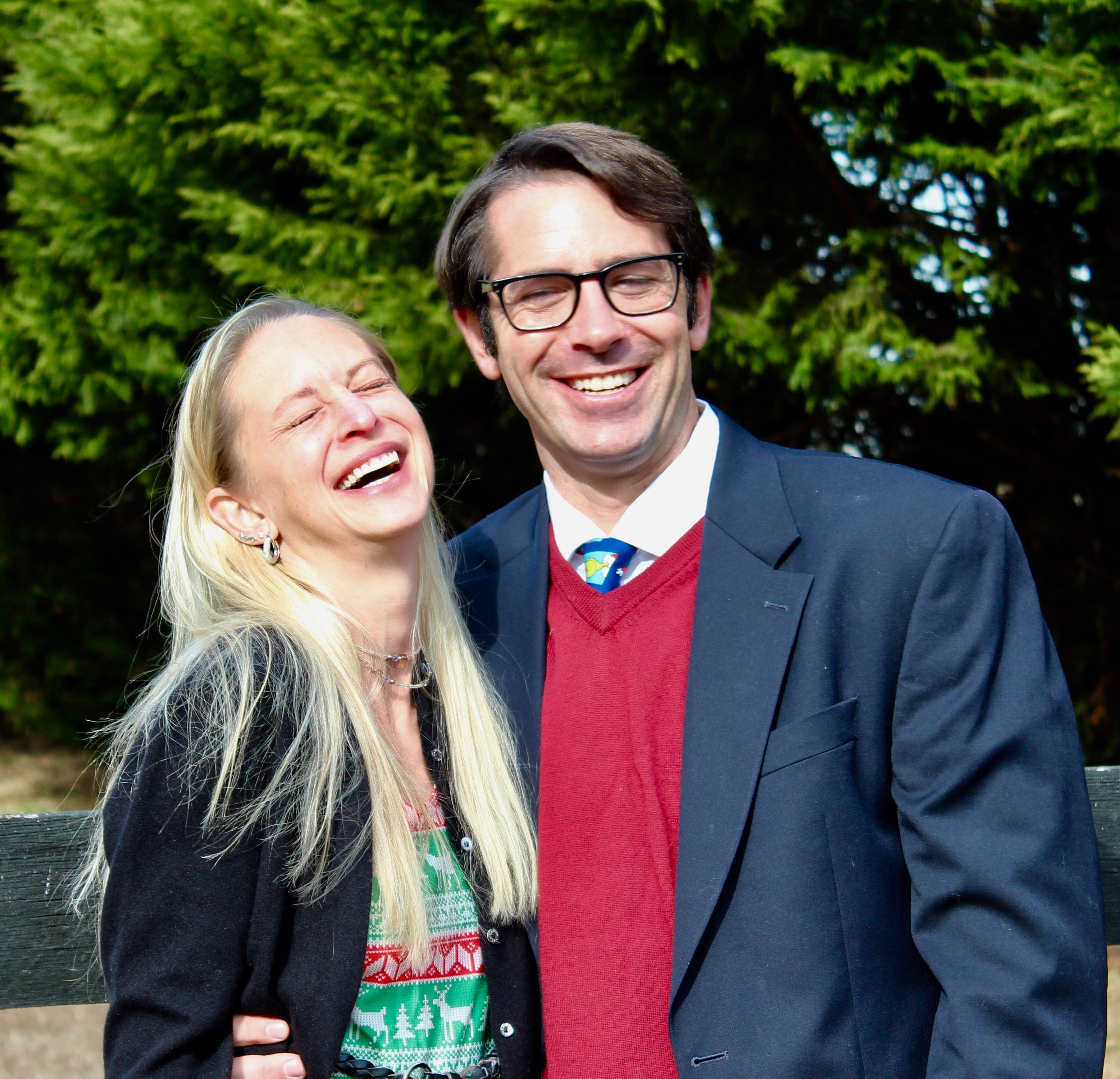
I’ve only paid people to take our pictures twice in my life: once was for our wedding and the other time was this past April for The Front Porch Project, a donation-only situation with proceeds going to Covid relief (Charlottesville people, check out Robert Radifera if you’re looking for local photographical talent!). My sister-in-law, Caroline, who schedules photo shoots for her beautiful family much more frequently than I, decided that we needed to have a session done before Christmas 2018. She’s a very talented unprofessional photographer (and a very talented NICU nurse by profession), so we got a little dressed up and went over to my mom’s property to have Caroline capture the five of us. After we’d done a bunch of group shots, she said it was time for a few of just my husband and me. We’re both pretty awkward when posing, and the kids had been less than cooperative throughout much of this process, but Caroline guided us through it (“Now look at each other” and “Take off your glasses for this one” and “Lean casually against the fence”). When she delivered the very no-nonsense directive of “Look longingly off into the distance,” my husband replied, “You mean ‘the distant future’? Okay. Look! The kids all just went off to college!” It was so funny and perfect in that moment because one of said children was crying in the grass while the other two were running around in literal circles and screaming at the top of their lungs. The candid Caroline took in that moment is one of my favorites, even though both sets of our eyes are closed, because it shows us laughing at the conundrum of parenting in which both stark reality and sheer ridiculousness can coexist.

Now, not even two years later, the whole idea of sending kids to college makes me shudder. It’s amazing the kind of sea change half a year during a pandemic can cause. Sending my young ones, my little rule-minding, prepubescent, closely supervised and easily circumscribed children, to elementary school with their extra face coverings tucked into their backpacks and morning health screenings completed via iPhone app: it all feels so manageable, so controlled, so quantifiable–even during these times. Considering what the school has done and is doing to ensure that things can run smoothly and work safely makes it so easy for me to trust. By contrast, however, a week or so ago I learned that my little sister, half my age and away at college in North Carolina, has Covid. Sure, she does classes online and wears a mask and washes her hands and all of the things, but still. Being twenty years old and with no preexisting health conditions, she’s recuperating quickly and will be back to full health soon, but still.

This time isn’t easy for any parent with kids of any age(s). It’s stressful and terrifying in unprecedented and unanticipated and overwhelming ways, and just when we feel like we’ve achieved that frequency of stasis where we can find foothold, some new wave of surreality comes to kick us off our feet. But this I know: I’m so glad my oldest child is only ten.  I’m grateful that I don’t have to deal with the logistics and the fears involved in sending–or not sending–a kid to college. I remember being a teenager with an invincibility complex and that eclipsing streak of selfishness most young people possess. I was probably more responsible than many teenagers, but my priorities were far from being sensibly solidified, and the thought of having children that age right now completely freaks me out. I feel so fortunate that, these days, I can pack all the god-forbidden lunchboxes and sit baking in my seven-seater car in the pickup line and know exactly where my three little people are at all times. I’m so happy I get to sing the same Moana song at least once every damn night and complain about making dinner AGAIN for all of these picky people who are picky about different things. Because these people are HERE. WITH ME. Sure, I hope that some day they’ll go off to college if that’s the right choice for them. And I hope that a lot sooner than then, my husband I can close our eyes and throw back our heads and laugh at the prospect of being empty-nesters without a frisson of pandemic panic even entering our minds. But now, in this the month of September in the year 2020, I give thanks that I have little kids and not big ones just yet. For now, I’ll take the gummy vitamins going through the wash in uniform shorts pockets and the incessant interrogative imploring of “Mommy?” all afternoon and the piles of sticks on both porches in which every single stick is special. For now, I breathe a sigh of relief for the three unmade beds upstairs that will contain those little bodies every night–well, at least until the wee hours of the morning, when Arlo may or may not still find his way into mine.

fullsizeoutput_428a


Inscription Fiction (IF) 1

Check out my Inscription Fiction (IF) page for what this is all about! Here’s the first of what I hope will be many forays into IF:

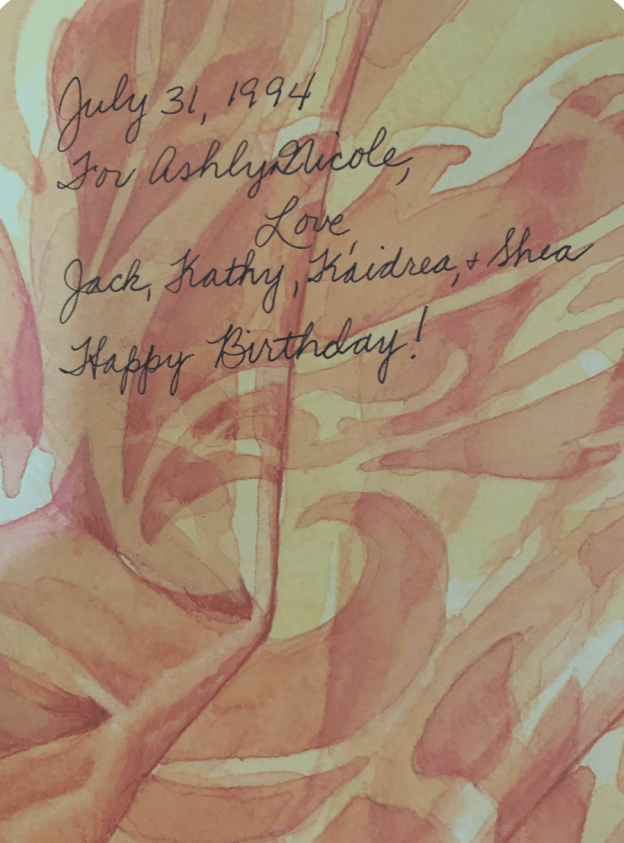
Kathy started it all with her wedding-invitation caliber cursive. That capital “F”! That capital “H”! The spacing of the “shly” in Ashlyn’s name! Ellen and I swooned via text about Kathy’s penmanship because we decided that hers was the hand that inscribed this hardback copy of Melisande by one of my favorites, E. Nesbit. (Commonly attributed to Einstein, the quotation “If you want your children to be intelligent, read them fairy tales. If you want them to be more intelligent, read them more fairy tales” guided me to this book selection. I’m not sure if Einstein’s assertion is accurate or not, but as it can’t logistically be disproven, I’ve taken it into serious consideration.) Now, Kathy, what’s with that final “n” in Ashlyn’s first of two first names? Did you almost forget it due to the fact that, when you say her name, the “n” in Ashlyn and the “N” in Nicole blend together because that glottal stop is just too clunky? Or is AshlynNicole one word?

In our very own fairy tale, Ellen and I decided that Jack and Kathy gave this book to their granddaughter, Ashlyn Nicole, who was named for Kathy’s father, Ashley, and her sister, Nicole, a febrile youth who never lived to see her 18th birthday. When naming her baby, Kathy and Jack’s daughter changed “Ashley” to “Ashlyn” because her husband had had a previous relationship with someone named Ashley (it ended spitefully), and his mother’s name was Lynn, so they hybridized the names to neutralize a variety of situational hazards. Kathy has always been bothered by her father’s name being blended with her daughter’s mother-in-law’s name (she and Lynn never had seen eye-to-eye on things), so that diminutive “n” was intentional, a nod to that knee-jerk passive aggression that people of a certain generation are seemingly inured to. Ashlyn was turning six that year, so Kathy and Jack sent her this book along with a framed photograph of them with her and her parents taken on her fifth birthday the summer before. (That year they’d been invited over on the actual day to watch Ashlyn blow out candles and open gifts. This year Ashlyn had wanted a party with her friends, and grandparents were only invited to pay a phone call, so Kathy included the photo as a subtle reminder of this. Well, she thought it was subtle. Her daughter did not.)

As for Kaidrea and Shea, they were Jack’s beloved pair of bearded dragons. “Kaidrea” is a coinage paying homage to Jack’s dearly departed Italian father, Andrea, but also respecting Ezra Pound’s entreaty to “make it new” because Jack’s other love (aside from reptiles), is modernist poetry. Shea is so called because of the eponymous stadium, home to Kathy’s beloved Mets and the location where she and Jack celebrated his fiftieth birthday, the occasion on which she presented him with the lizard as a companion for Kaidrea. It was a very special day not only because Jack had officially existed for half a century but also because the Mets bested the Phillies, which Kathy would have delighted in seeing. Unfortunately, she suffered such hot flashes that day (early menopause, though she wouldn’t admit it) that she drank so many red aluminum cans of cold Budweiser that she and Jack both lost count, and he had to put Shea the bearded dragon in Kathy’s pocketbook and carry Kathy over his shoulder to the car.

And whatever happened to Ashlyn? Well, she just turned 32 after finishing her nursing degree and lives in Atlanta with her husband and two cats. They are expecting their first child, a boy they plan to name Jack. You’ll be glad to know that Kathy is delighted.

Allegory of the warm mango

One day I bought a box of Champagne mangoes at Costco because my daughter was on a mango kick. (Aside: I looked up Champagne mangoes because I felt I needed to understand them better, and whoever wrote the introductory paragraph on Wikipedia describes them as having “a somewhat sigmoid (oblong) shape and a gold-blushed yellow skin” and that “their buttery flesh is not fibrous, and they have a thin pit”. Next time I have a glass of actual champagne, I’m toasting this writer because that’s just a little bit of encylopedic poetry right there.) It was a hot day and I had other errands (this was pre-covid when I did things like errands), so the mangoes sat in the car for a while before I brought them inside. As soon as I did, Summerly (seven years old at the time) asked me to cut one up for her, and upon tasting it, she exclaimed in wonderment, “Wow! It’s so much better when it’s warm! Why does mango taste better warm?”

Of course there may very well be a scientific explanation including enzymes and amino acids and the molecular structure of fructose and taste receptors and how fluids expand in direct proportion to increase in temperature, but I know none of that. What I do know is what the purpose of fruit is, as it pertains to the plant that went through the perspiration of respiration to grow it, and this is to disseminate its seeds and perpetuate itself. I realized the conundrum of the fact that I was looking at my very own child while I was thinking these things in response to her question, and here’s a version of how I answered her (by the way, many of my answers to my kids’ questions begin with these first four words): “I don’t know, but maybe because the fruit of the mango tree contains its pit, and the reason that fruit tastes good is so it can attract animals to it for food. This way the animals will eat the fruit and leave the seed to grow a new tree, and thus the tree that grew the original mango has done its botanically biological job, which is reproduction. And the mango itself, at its pinnacle of deliciousness, is when it’s ripest and fullest and most enticing as a food source, and nothing tastes better than right after it’s picked, so the mango is doing its best job in that moment when the fruit has been given just the right amount of sun and water and balance of nutrients from the soil. At that moment, that tipping point after which the fruit will begin its path to decomposition (the second best route to regermination), when it’s gotten the best angle of sun on that most special of days, in that beatific moment when an animal would approach that particular tree amid a grove of other fruiting trees and select that particular fruit, the mango is warm. Maybe it tastes best to you when it’s warm because you are an animal and the tree knew, in the ways that all plants know, that to attract you was the means to an end with the objective of regrowth.”

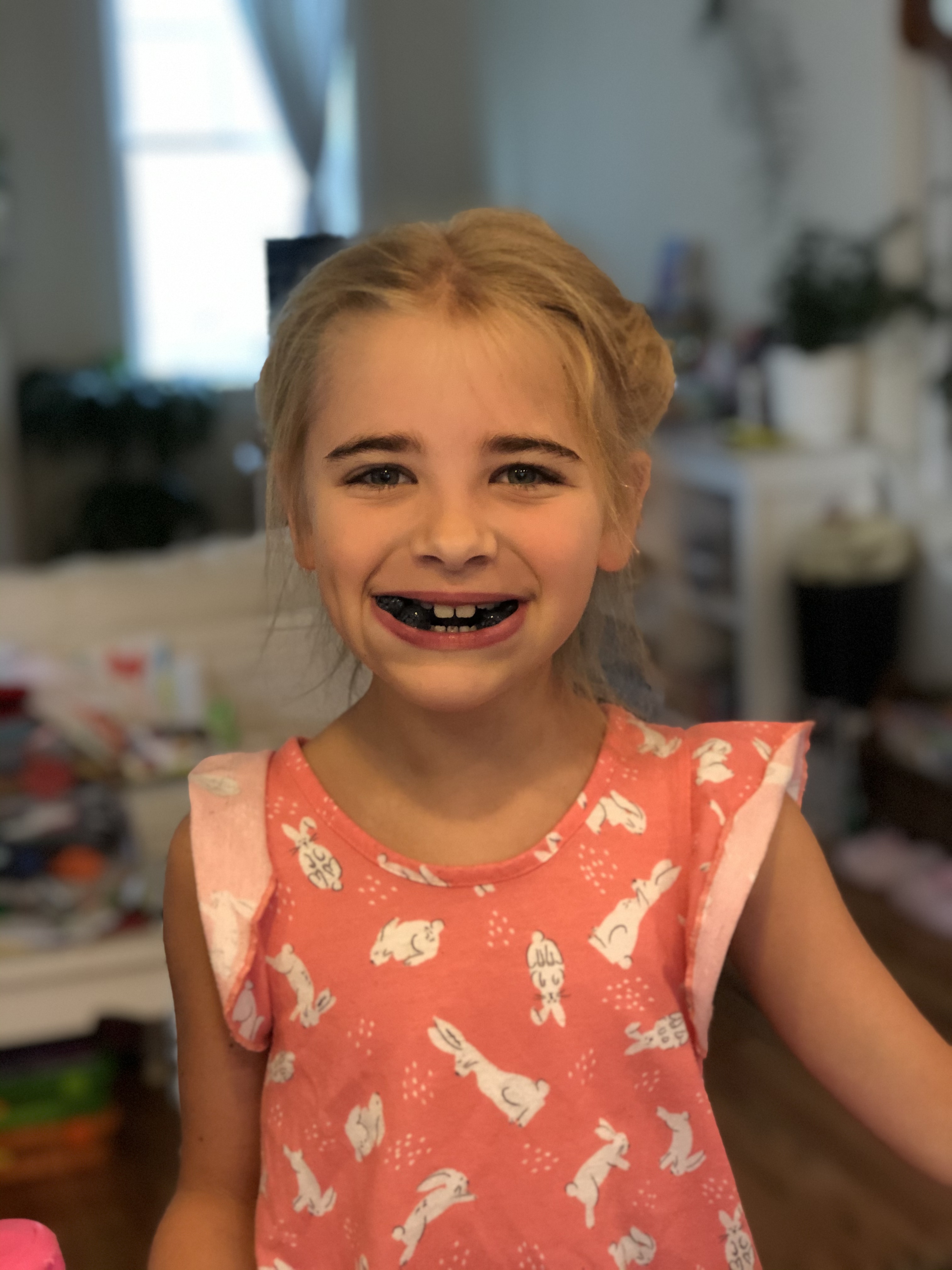
And then, as my captive audience hadn’t yet left her seat, I took it one step further to say that maybe each of us is like a piece of fruit hanging on a tree, and if we could have just the right titration of factors to inspire every kind of our personal health, that is when we would be ripest, warmest, happiest. And when one of those factors is out of balance for us (e.g. too many worries or not enough sleep, feeling like the days are too short or wishing we had more time, missing people or wanting to be alone), the perfection of our happiness is compromised. Most of us most of the time are probably feeling more like a mango that’s either overripe or too green or frozen solid, especially these days. But I love the idea, utopian as it may be, that there might be a warm mango moment for each of us, at least once in our lives, when all the aspects of our bodies and minds could attain a nirvana-like balance. Thinking I’d done a bang-up mom job responding to a question that I had no precedent for answering and that was probably subjective anyway, I smiled triumphantly at my daughter, who by this point had moved onto the bowl of blueberries on the kitchen island, and asked her, “What do you think?”

“Mommy,” she said, “Look how many blueberries I can fit in my mouth!”

IMG_8654

The perfect bite

A few years before my first child was born, my mom and stepdad took all five of us “kids” to the Turks & Caicos for one of those “everything included” vacations that tends to encourage all manner of indulgence. A fine time was had by all, indeed, and it was a week I’ll never forget, though (as frequently happens as time passes), some of the most memorable things about those days didn’t feel at the time like they’d be the most memorable. For example, one night we went to a hibachi restaurant (talk about “dinner and a show”!) where we sat at a horseshoe-shaped table with about three other families. My mom was wearing a pair of earrings I’d made her for Christmas one year–a pair I liked a whole lot and of which I was particularly proud–and one of the other women at the table, also a middle-aged mom, who’d engaged her in friendly conversation and who seemed fun and smart and kind, complimented her on the earrings. It was one of those all-too-rare compliments so specific that it was obvious that there was a lot of thought behind it, and my mom said, “Thank you! My daughter made them,” and then proceeded to give the earrings to her. Just like that. It seemed like she’d barely thought twice about giving those earrings I’d made her away. My twenty-something self was stung. I thought her giving them away meant that she didn’t really like them that much or care about the fact that I’d made them, specially for her, in her favorite color (blue, always blue). It really rankled for a while. Now fast forward about a dozen years.

When my first child was about eighteen months old, my brother asked me, “So what’s it like being a parent?” (I love this man because he asks questions like this and cares a whole hell of a lot about the answers, but this was obviously not an easy one to sum up in just a few words.) After staring at him dumbly for long enough that it made him laugh, I thought of a way to give him an idea that would really resonate with him on a personal level. “You know that perfect sandwich? With all of the components layered in beautiful order and in *just* the right proportions? And you know when you get to that perfect bite, a few bites in–you know the one? Like, the tomato is a saturated red, and the bacon presenting is mostly meat and just a little fat, and the lettuce almost cries with crunch? And everything is so fresh and smells so good and the crust and crumb of the bread is both the crown and cushion for this positively kingly mouthful of food? And you’re really hungry and those first few bites just fanned the flames of that hunger?” That’s basically what I said, and I could tell by the look on his face that he could almost taste it. (If you know Peter, then this will make excellent sense.) He nodded, thinking about that perfect bite of the perfect sandwich, thinking that what I meant was that being a parent was basically the best thing ever to happen to a human being. “Well, if you can imagine that bite, then being a parent is like wanting to offer that bite to your child. Actually turning that sandwich, on purpose and unbidden, away from you to feed it to your kid.” I’ll never forget the look of disbelief that crossed his face, but when he has kids, if he has kids, I’m planning to remind him of this conversation, and I know he’ll understand it then.

Rewind about a dozen years, back to that hibachi table. If I’d known then what I know now, as they say. But I couldn’t have known it then, I don’t think, because I hadn’t experienced parenthood. If I’d known what it was like to willingly forgo enjoying that perfect bite in favor of sharing it with my child, I’d have appreciated my mother’s gesture of generosity as it actually was, the way I appreciate it now. What she was doing when she handed that pair of earrings across the prepaid pork fried rice and bottomless glass of sake was a symptom, a beautiful one, of motherhood. I was right that she didn’t think twice about it. A mother becomes an artist of giving, and my mother, mother of five, is one mighty fine artist. The other woman, a mother herself, who accepted the earrings, who didn’t refuse the gift, must have understood this. The part I might like the most about my mother’s act of beneficence is that the bigger gift was the connection there, the way her hand, holding out a pair of earrings, was really offering an unspoken, “I see you; I know you.” I’d be really surprised if those earrings haven’t been given away at least a few times since then. But maybe the best gift of all is the one this moment gave to me in hindsight, the clarity of perspective that is born along with the child and that changes the way a mother sees her sandwich forever. I hope that one day I walk out of a restaurant, smelling of sesame oil and with fortune cookies in my purse, wearing at least one fewer pair of earrings than when I’d entered.

Carmen’s drawer

One of my closest friends (her name is Carmen) moved away a year ago, and since then we’ve been exchanging videos using the Marco Polo app. In these videos, we talk about everything from Enneagram compatibility to cooking for children (she has four kids ages four through ten), Costco sales to education systems (she teaches French and math–how cool is that?!), politics to dish soap (we’re two blue Dawn diehards on a mission to broaden surfactant horizons). During one of her recent updates, she showed me the new piece of furniture she and her husband had bought to put in their dining room as part of a home improvement project. It was a beautiful piece from Ikea that looked great against the shiplap siding of the room, and she’d organized the kids’ coloring books using magazine holders (we’d recently discussed the phenomenon of PILES of STUFF, and her pet pile at that point happened to be coloring books). She gave me a tour of the sideboard to showcase her newfound organization system, and it ended with her opening the drawer above the cabinet space and saying, “I’m not sure what to put in here yet.”

Hearing these words and seeing that space devoid of anything but possibility blew a thick layer of dust off at least a few neurons while I processed this. An empty drawer! Just think of it: a tridimensional tabula rasa, the gift of space unfilled. My favorite part of moving into a new home (and there aren’t many parts of that process I enjoy) is deciding which kitchen drawer should be used for what. The do-si-do of silverware and dishwasher, the relative utility of utensils, the importance of ensuring omnipresent proximity of the all-purpose scissors and the almighty dishcloth–these are all deciding factors necessary to consider. I take this so seriously, in fact, that last summer I rearranged the contents of all the drawers in the kitchen at the beach house where we were staying because whoever decided that the drawer of menus and magnets should score prime real estate at the kitchen island clearly had never used anything but a microwave to prepare food. This is all to say that that feeling of power, of potential, of the ability to make concrete determinations about how to fill an empty space–and having that space available in the first place–is something I’d been missing but didn’t know it until that moment. The more I thought about it, the more allegorical this all felt and the more sense it made, considering what we’re living through. Life during this pandemic feels like being forced to move into a house we didn’t choose or want or like, a house with no windows and the rooms all wrong. Parenting these days feels like moving into that same house but also with all of the kitchen drawers glued shut. My wish for us all is that we can come upon an empty drawer in our lives, gaze into its beautiful bareness, and pause for minute knowing that it is ours to fill with something, anything, when–and if–we want.

“Just in case”

We had to rehome our one year-old dog in October 2018. That’s another story, but ever since then my kids had missed many things about having a pet, so when my son’s preschool teacher asked if we’d like to bring the classroom guinea pig, Paddy Paws, to our home for the week of spring break (because apparently he’d been asking her about this), I had no reason to say no. I mean, we’d had the teacher’s previous guinea pig at the house at least twice for school vacation weeks, we knew the drill, and the kids always had fun with a little furry visitor. So, on March 6th, 2020, I loaded the guinea pig cage into my car at pickup. The preschool teacher put a big bag of bedding and another big bag of timothy hay in the trunk of my Suburban, and I believe her exact words were, “It’s way more than you’ll need, but just in case!” I think you probably know where this story is going.

Nearly six months later, which is half this little animal’s life, guess who is still here. The good news is that Paddy Paws is the best guinea pig in the history of domesticated rodents. I know this because my mom was once sold a male guinea pig (by a pet store that claimed to only sell females) as a companion to her two female guinea pigs, and let’s just say that companionship didn’t just happen; it kept happening. She ended up with 11 before the little exercise in exponential growth was put to a stop. I read that the collective noun for  guinea pigs is “muddle”, and whoever decided that almost definitely was also put into the position of unintentional cavy breeder. Anyway, I know enough to know that Paddy Paws is the only guinea pig I’d consider having in my life.

With the knowledge that she’d return to school at some point, we welcomed Paddy into our family temporarily but indefinitely. With this knowledge also came the fear that we wouldn’t keep her tame enough: what if she went back to school and bit all of the little preschoolers? We’d be blacklisted by one of our favorite preschool teachers of all time AND all of the preschool parents of traumatized three year-olds with bandaided hands. So, as is typical of so many parents during this pandemic, we threw ourselves into a project. We took Paddy Paws out of her cage and handled her multiple times a day. We spoiled her with more strawberry tops and pea shoots from the garden than any guinea pig could ever expect. We decided to let our yard turn to clover. “Romaine lettuce” as a line item transferred from my regular grocery list to my Costco list. My husband bought special feeders to hang in the cage so she wouldn’t cross-contaminate her food and hay. After the kids were in bed, we took her out and let her munch on carrot peels with us while we numbly scrolled through news or texted people about things like the high price of toilet paper and the low price of gasoline. We spoiled her rotten lest she be returned to school a feral savage, as if an angelic manifestation of beneficence or a monsterish blood-menace were the only two possible outcomes.

After a few months, it started to look like preschool would happen exclusively outside, and perhaps the guinea pig wouldn’t return to school this fall. Or maybe ever. We started to say things like, “Well, if she does end up staying here…” which turned into, “Well, if she does go back to school, then maybe we’ll get a bunny or something because NO guinea pig could ever measure up to this one.” And then, in early August, the preschool teacher sent an email saying that she was ready to have Paddy Paws return to school in a couple of weeks. Cue the panic-breathing and the bunny search. Seventy-two hours later, my three kids and I drove 63 miles away to buy the most precious velveteen mini rex rabbit in creation. He’s currently sitting on the floor vent next to me because he likes the breeze on his undercarriage. Everyone was content with this situation and, though we would miss Paddy Paws, the preschool teacher had offered for us to have our little friend visit her old home (a.k.a. our home) on future breaks from school (hopefully with less nebulous endpoints). Ahh, who doesn’t love a happy ending?

The universe, apparently. This morning, while our expensive little rabbit was enjoying the air conditioning by my feet, I sat down and opened my email to find a message from the preschool teacher saying that she’d just been made aware of the sanitizing protocol for school and that they’ll be spraying down the spaces with major disinfectant and, considering this, maybe it wouldn’t be a hospitable place for a pet and would we like to keep her after all? This, my friends, is why I’m about to take everything out of the freezer and replace it in a more organized fashion. At least that will be one compartment of this life where I can eliminate a muddle.